
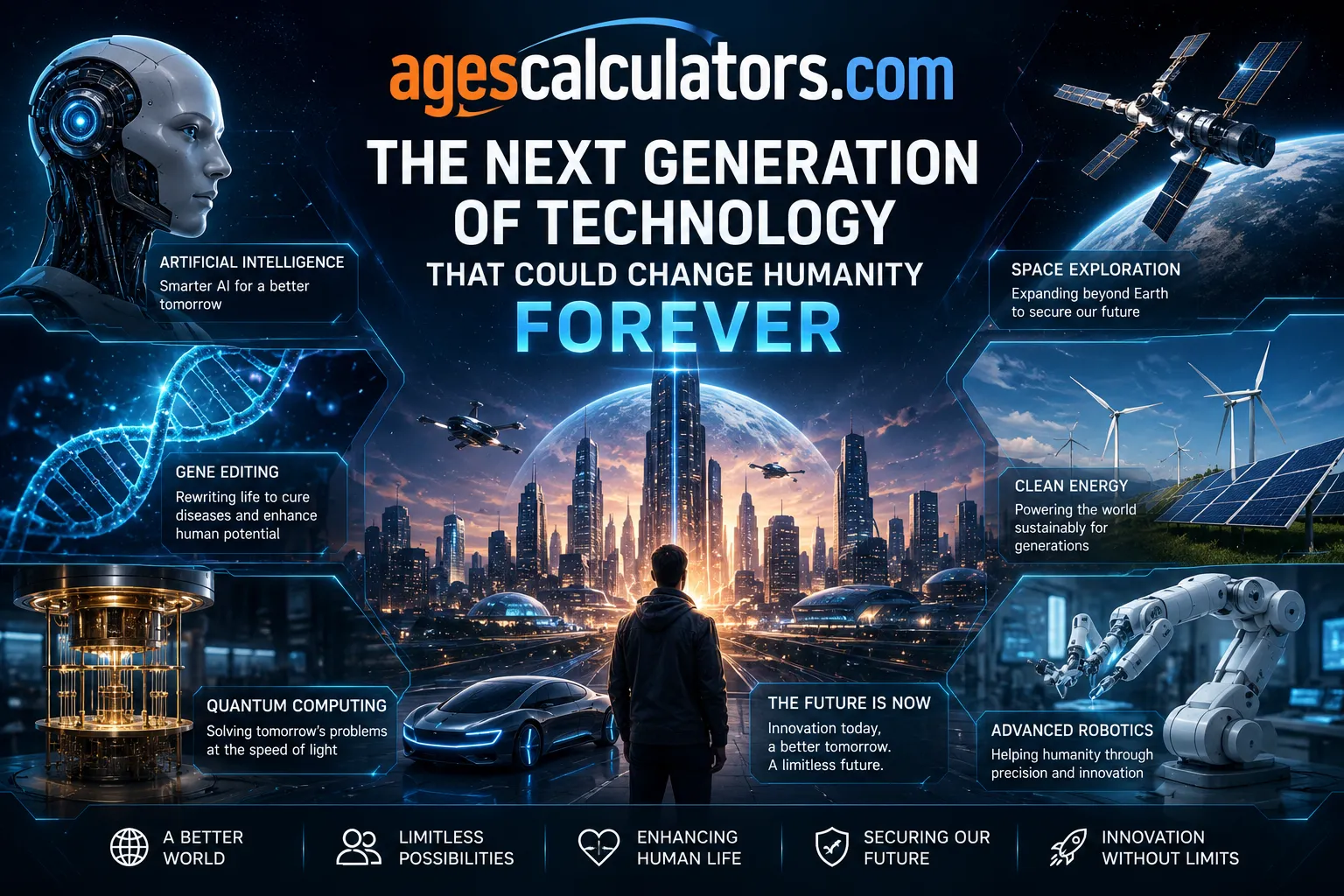
For more than a decade, smartphones have dominated modern technology. They changed communication, entertainment, business, and social interaction worldwide. However, many experts believe the smartphone era may eventually be replaced by entirely new forms of technology.
Scientists and tech companies are now developing advanced innovations that could transform human life far beyond what smartphones achieved.
From augmented reality glasses to brain-computer interfaces, the next generation of technology may completely redefine how humans interact with the digital world.
The Limits of Smartphones
Although smartphones remain powerful tools, they also have limitations.
Users increasingly complain about:
- Screen addiction
- Battery issues
- Privacy concerns
- Constant distractions
- Digital fatigue
Technology companies are searching for new ways to create more natural digital experiences without forcing people to stare at screens constantly.
Augmented Reality Could Replace Screens
Augmented Reality (AR) is one of the most promising future technologies.
AR overlays digital information onto the real world through smart glasses or headsets.
Potential uses include:
- Navigation directions displayed in real time
- Virtual workspaces
- Interactive gaming
- Real-time language translation
- Digital shopping experiences
Many experts believe AR glasses could eventually replace smartphones for everyday tasks.
Brain-Computer Interfaces
One of the most futuristic technologies currently under development is the brain-computer interface.
This technology aims to allow direct communication between the human brain and computers.
Possible future applications include:
- Controlling devices using thoughts
- Helping disabled individuals regain communication abilities
- Faster digital interaction
- Advanced virtual reality experiences
Although still experimental, brain-computer technology could dramatically change human capabilities in the future.
Quantum Computing
Quantum computing represents another major technological breakthrough.
Unlike traditional computers, quantum computers can process enormous amounts of information simultaneously.
Potential impacts include:
- Faster scientific discoveries
- Advanced AI development
- Better cybersecurity systems
- Drug research acceleration
- Climate modeling improvements
Quantum technology could solve problems currently impossible for normal computers.
The Evolution of Artificial Intelligence
AI continues evolving rapidly beyond simple automation.
Future AI systems may become capable of:
- Advanced reasoning
- Human-like conversations
- Autonomous research
- Creative problem-solving
Some experts believe AI could eventually become one of humanity’s most powerful inventions.
However, others warn that uncontrolled AI development could create serious risks.
Smart Health Technology
Technology is also revolutionizing healthcare.
Future medical innovations may include:
- AI diagnosis systems
- Wearable health monitors
- Personalized medicine
- Robotic surgeries
- Gene-editing technologies
Healthcare may become more preventive instead of reactive as technology helps detect diseases earlier.
Space Technology and Human Expansion
Private space companies are accelerating innovation in space exploration.
Modern advancements include:
- Reusable rockets
- Satellite internet
- Lunar missions
- Mars exploration projects
Some scientists believe humans may eventually establish permanent settlements beyond Earth.
Technology developed for space travel could also improve life on Earth through advanced engineering and communication systems.
Ethical Challenges of Advanced Technology
As technology becomes more powerful, ethical concerns are growing.
Key debates include:
- AI control
- Human privacy
- Genetic modification
- Digital surveillance
- Technology addiction
Society may need stronger global regulations to ensure technology benefits humanity responsibly.
Will Technology Make Humans Better or More Dependent?
Technology offers incredible convenience, but it also increases dependence on digital systems.
Many people already rely heavily on:
- GPS navigation
- Social media
- AI recommendations
- Digital payments
- Smart devices
Future technologies may improve life dramatically while also reducing human independence in certain areas.
Finding balance will remain important.
The Future Is Arriving Faster Than Expected
Technological progress is accelerating rapidly. Innovations that once seemed impossible are becoming reality within years instead of decades.
Future generations may experience a world where:
- AI assistants are everywhere
- Digital reality blends with physical reality
- Human-machine interaction becomes seamless
- Technology becomes deeply integrated into biology
The next technology revolution may be larger than the internet revolution itself.
Conclusion
The world is moving beyond the smartphone era into a future filled with revolutionary technologies. Artificial intelligence, augmented reality, quantum computing, and brain-computer interfaces could fundamentally reshape human civilization.
While these advancements bring exciting possibilities, they also introduce ethical, social, and privacy challenges that society must carefully manage.
Technology will continue evolving rapidly, and humanity’s future may depend on how wisely these powerful innovations are developed and used.