
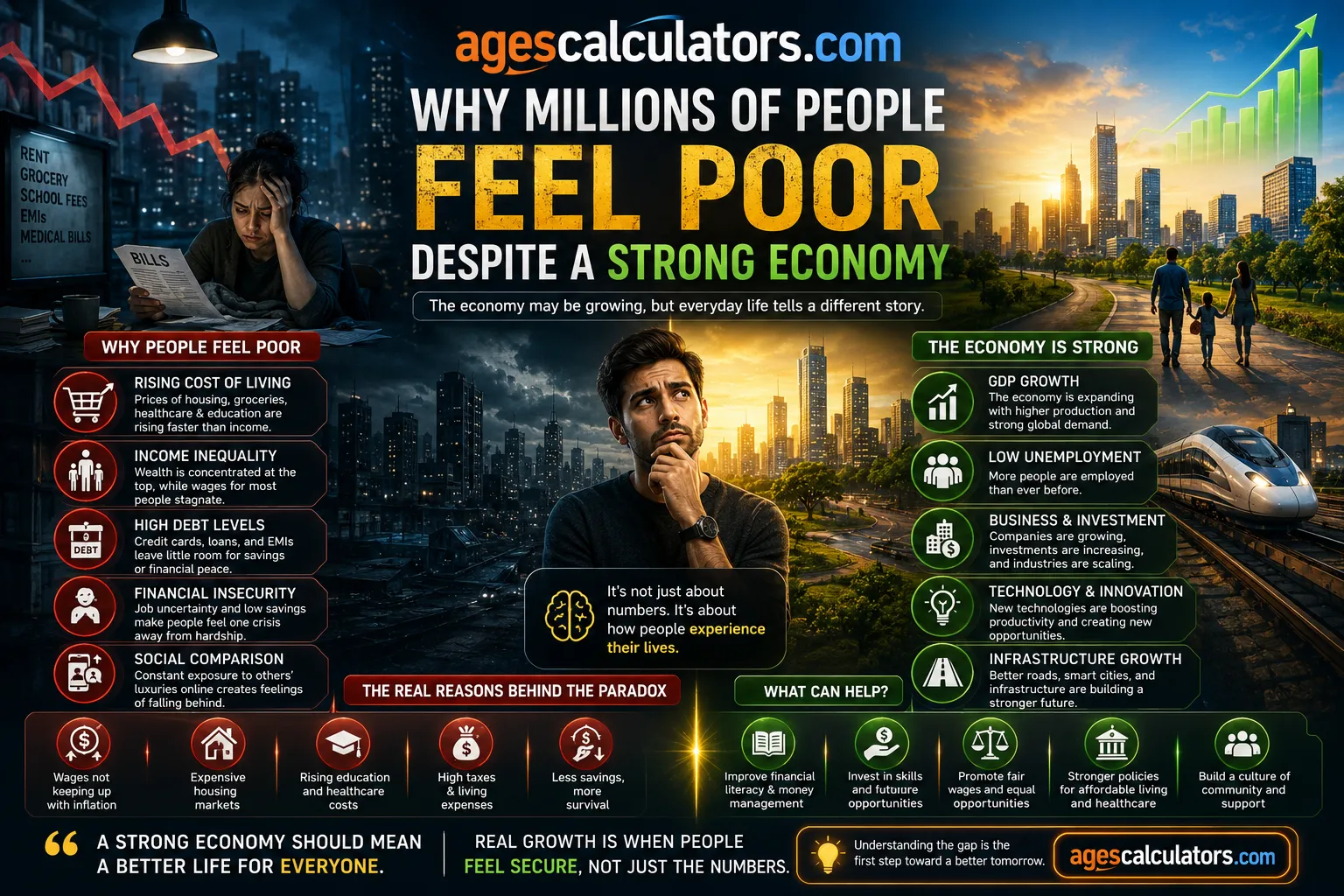
Governments and financial media often describe the economy as strong when stock markets rise and unemployment stays low. However, many ordinary people still struggle financially despite positive economic headlines.
This growing disconnect has created what experts call a “silent recession.” Even when official data appears healthy, millions of people feel financially stressed because their real purchasing power continues shrinking.
Rising living costs, housing prices, debt, and inflation are making everyday life more expensive around the world.
Understanding the Silent Recession
A traditional recession usually involves:
- Rising unemployment
- Falling GDP
- Reduced business activity
But the silent recession is different. People may still have jobs, yet they feel financially weaker every month.
Why?
Because salaries are often failing to keep up with rising expenses.
Inflation Is the Biggest Problem
Inflation has become one of the most important financial issues globally.
Prices for essential items like:
- Food
- Fuel
- Rent
- Healthcare
- Education
have increased significantly in recent years.
Even when inflation slows down officially, prices rarely return to previous levels.
As a result, many families feel trapped financially.
Housing Costs Are Crushing Budgets
Housing has become extremely expensive in many countries.
Young adults especially struggle with:
- High rent prices
- Expensive mortgages
- Rising property values
- Limited affordable housing
In some cities, people spend over half their income just on housing expenses.
This leaves little money for savings or investments.
The Debt Explosion
Consumer debt is reaching dangerous levels worldwide.
People increasingly rely on:
- Credit cards
- Personal loans
- Buy-now-pay-later services
to maintain their lifestyles.
High interest rates make debt even harder to repay.
Many households are financially surviving month to month despite earning reasonable salaries.
Social Media and Financial Pressure
Social media has intensified financial stress.
People constantly see luxury lifestyles online, including:
- Expensive vacations
- Designer products
- Luxury cars
- High-end lifestyles
This creates psychological pressure to spend more money even when finances are unstable.
Many individuals now prioritize appearance over long-term financial health.
Why the Stock Market Does Not Reflect Reality
Stock markets mainly benefit people who already own assets.
When stocks rise sharply:
- Wealthy investors become richer
- Companies increase profits
- Asset values climb
But ordinary workers may not experience the same benefits.
This explains why markets can reach record highs while average consumers still struggle financially.
The Impact on Younger Generations
Millennials and Gen Z face unique financial challenges.
Compared to previous generations, younger people often deal with:
- Higher education costs
- Expensive housing
- Lower savings rates
- Unstable job markets
- Delayed financial milestones
Many young adults feel they are working harder but progressing slower financially.
The Mental Health Effect
Financial stress strongly affects mental health.
Common problems include:
- Anxiety
- Burnout
- Depression
- Sleep issues
Money worries are becoming one of the biggest sources of emotional pressure globally.
Experts believe financial education and better money management skills are more important than ever.
How People Are Adapting
To survive rising costs, many people are changing their financial habits.
Popular strategies include:
Side Hustles
People increasingly earn extra income online through freelancing, content creation, and digital businesses.
Investing Earlier
Young investors are starting to invest sooner to fight inflation.
Minimalist Living
Some people reduce unnecessary spending and focus on essential needs.
Remote Work
Working remotely helps save transportation and living costs.
These lifestyle changes are reshaping modern financial behavior.
What the Future May Look Like
Economists remain divided about the future economy.
Possible scenarios include:
- Slower economic growth
- Continued inflation pressure
- Higher automation
- More digital jobs
- Increased wealth inequality
Governments may eventually introduce new policies to address financial pressure on middle-class families.
Conclusion
The silent recession highlights the growing gap between economic statistics and real-life financial experiences. Even when markets appear strong, many ordinary people continue struggling with rising costs and financial uncertainty.
Understanding inflation, debt, investing, and money management has become essential in today’s economy. People who adapt financially and build smarter habits may navigate these challenges more successfully.
The modern economy is changing rapidly, and financial awareness is now more important than ever before.